Not all fats are created equal — especially when it comes to digestion and heat. The fats you cook with affect everything from nutrient absorption to flavor, heat stability, and the types of fatty acids in your diet.
Here’s how to choose the best fats for stable energy, better digestion, and flavor that feels good.
Healthy Fats, Simplified
Fat doesn’t make you fat.
The right kinds are essential for:
Digestive health – fats stimulate bile flow, helping your body break down and absorb nutrients.
Hormone balance and brain function – every cell membrane in your body relies on fat for structure and signaling.
Vitamin absorption – vitamins A, D, E, and K are all fat-soluble, meaning you need fat to absorb them.
Research consistently supports the importance of dietary fat, particularly unsaturated fats, as part of a healthy diet.
Quality Over Type
Quality matters, too. Look for fresh oils from reputable producers and store them away from heat and light to protect against oxidation.
For butter and ghee, that means grass-fed. For oils, cold-pressed or naturally refined. And when in doubt, avoid anything labeled “vegetable blend” — it’s likely refined seed oil.
Fats to Avoid
The problem isn’t natural fat — it’s industrially processed oils. Try to avoid:
Trans fats and partially hydrogenated oils
Highly refined or repeatedly heated oils — particularly heavily processed soybean, corn, canola, and cottonseed oils.
Highly refined oils undergo multiple processing steps, and all cooking oils can oxidize with excessive heat, repeated reheating, or prolonged storage. When possible, prioritize fresh, minimally processed fats and match the oil to the cooking temperature. Even healthy oils can turn harmful if overheated, so pay attention to their smoke points.
Understanding Fat Types
All fats are a mix of saturated, monounsaturated, and polyunsaturated fatty acids — but their balance determines how they behave with heat.
Saturated fats (like ghee, butter, and coconut oil) are solid or semi-solid at room temperature and are the most stable for cooking.
Monounsaturated fats (like olive and avocado oil) are liquid and work well for medium to high heat.
Polyunsaturated fats (like flax or walnut oil) are delicate and best used raw or at low heat.
The Five Best Everyday Cooking Fats
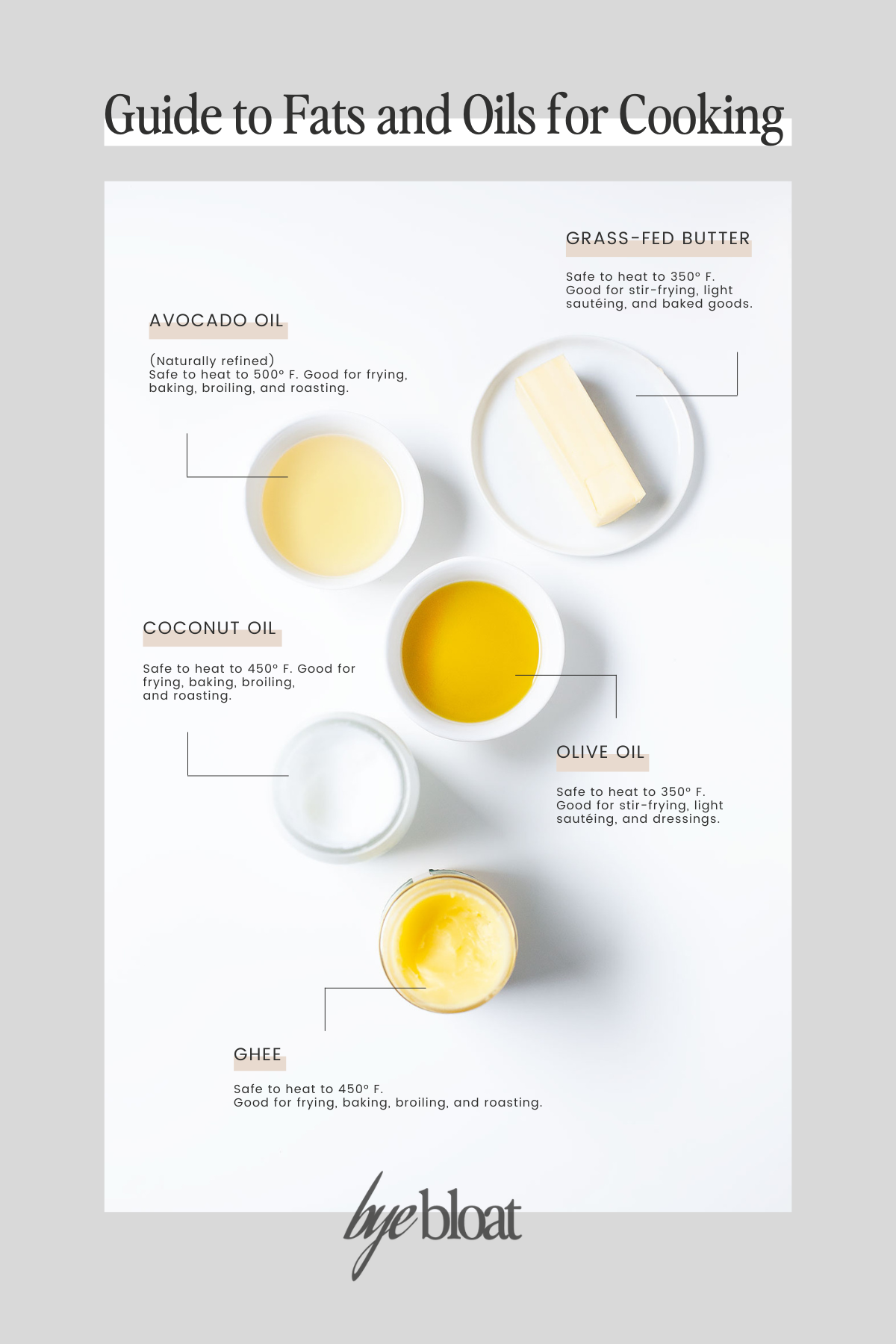
Avocado Oil (Naturally Refined)
Mild in flavor and rich in monounsaturated fats, avocado oil is a versatile choice for higher-heat cooking.
Smoke point: ~500°F
Best for: Roasting, baking, sautéing, higher-heat cooking
Ghee
With the milk solids removed, ghee has a higher smoke point than butter. It also contains small amounts of short-chain fatty acids, including butyrate, which plays an important role in intestinal cell health and gut barrier function.
Smoke point: ~450°F
Best for: Sautéing, roasting, higher-heat cooking
Coconut Oil
Rich in saturated fat and naturally high in lauric acid, coconut oil has a subtle coconut flavor that works particularly well in certain baked and sautéed dishes.
Smoke point: ~350°F
Best for: Medium-heat cooking, sautéing, baking
Grass-Fed Butter
Butter provides fat-soluble vitamins and small amounts of butyrate, a short-chain fatty acid that plays an important role in intestinal cell health and gut barrier function. Grass-fed butter also tends to contain higher levels of certain fatty acids and fat-soluble nutrients than conventional butter.
Smoke point: ~350°F
Best for: Low- to medium-heat cooking, baking, finishing
Extra-Virgin Olive Oil
Rich in monounsaturated fats and polyphenols, extra-virgin olive oil is a versatile everyday fat that also helps with the absorption of fat-soluble vitamins.
Smoke point: ~375–410°F
Best for: Sautéing, roasting, dressings, finishing
What Happens When Oils Get Too Hot
Every fat has a temperature limit called its smoke point — the point where it breaks down, oxidizes, and produces free radicals. If your oil smokes, it’s already past that point.
That’s why:
Avocado oil and ghee are best for high heat.
Coconut oil, butter, and olive oil are better for gentle sautéing.
Matching the fat to the cooking method helps preserve its quality and flavor.
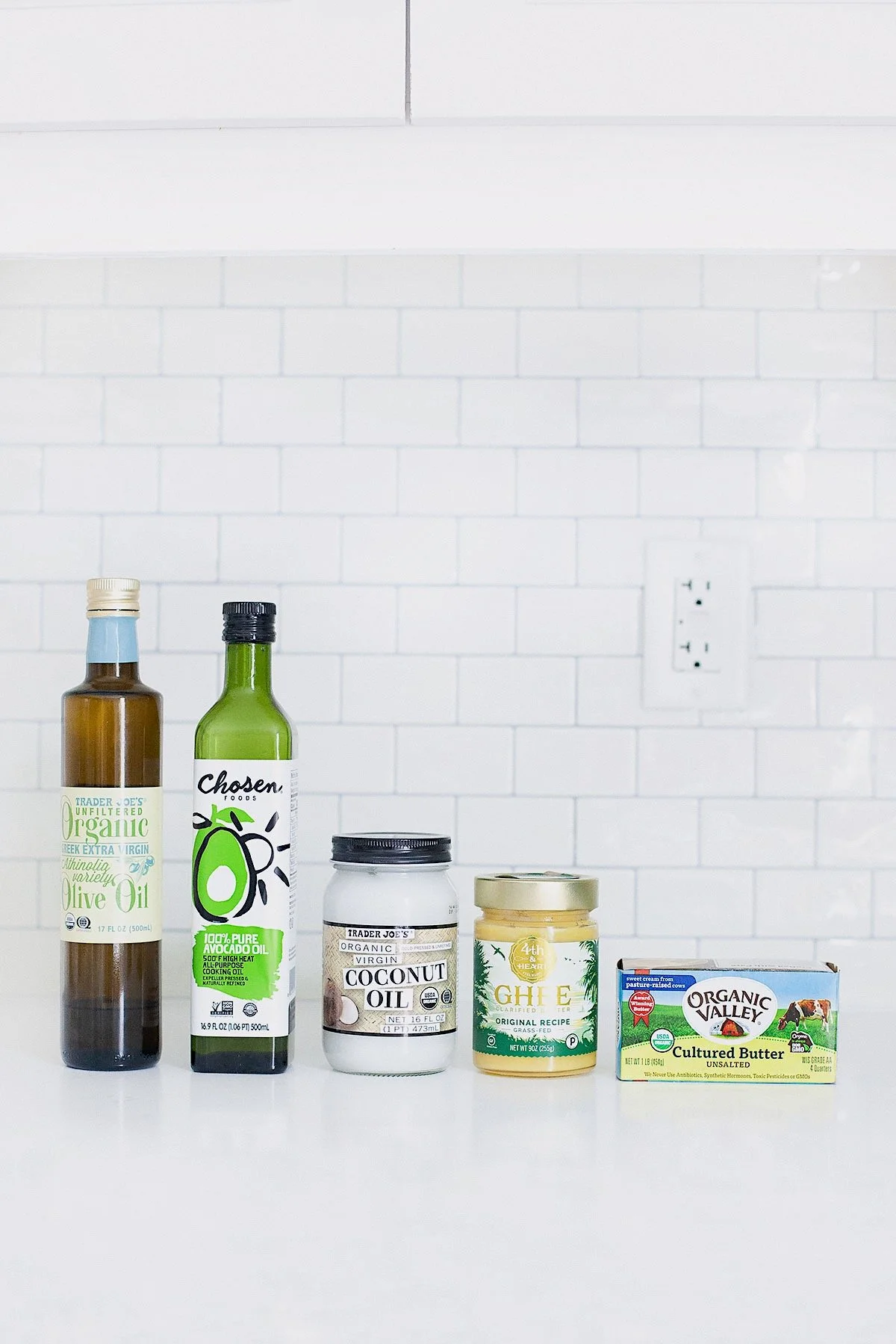
Favorite Brands
Avocado Oil: Chosen Foods (Naturally Refined)
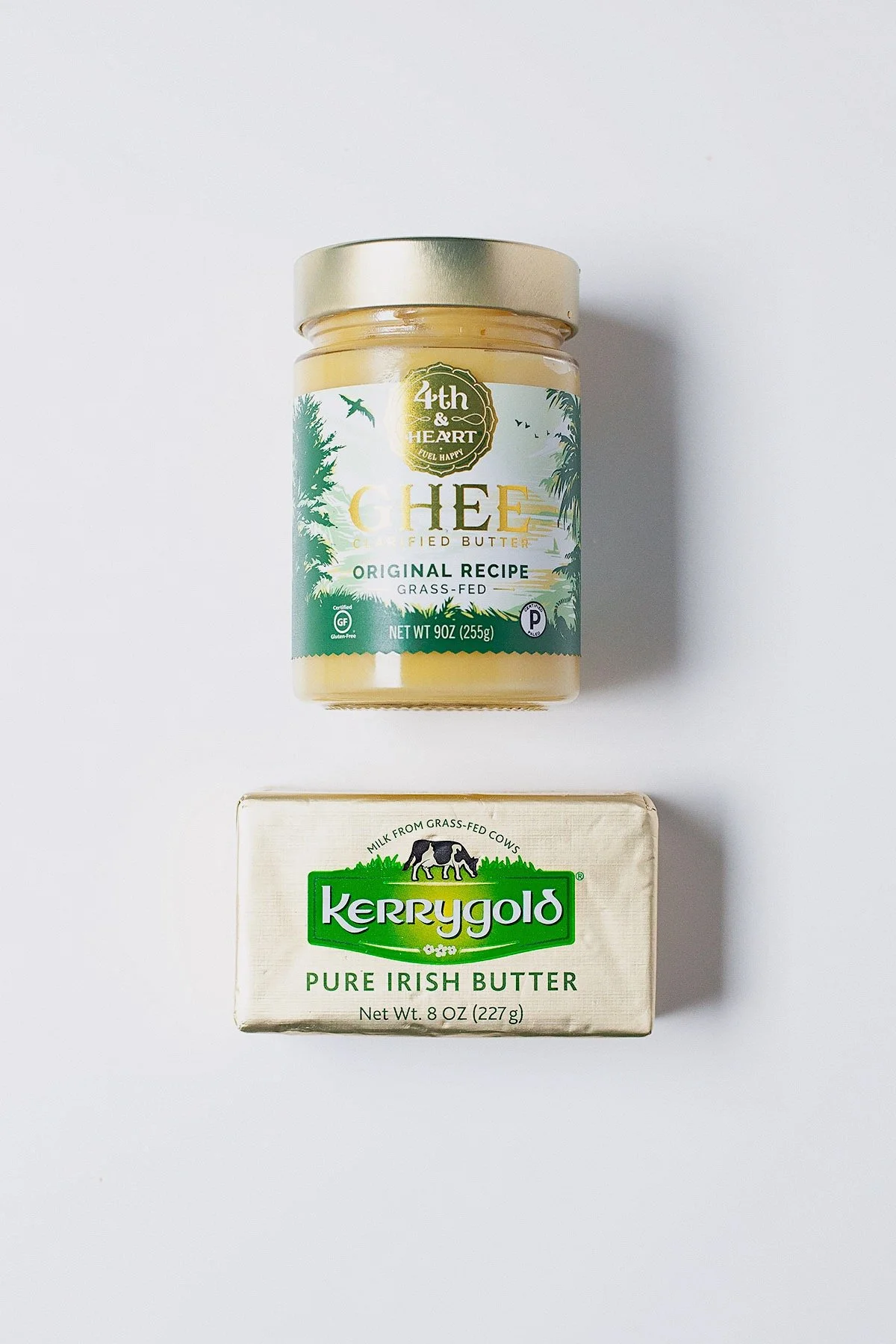
Ghee: Fourth & Heart, or homemade from Kerrygold butter
Coconut Oil: Trader Joe’s Organic Virgin or Nutiva
Butter: Organic Valley Cultured, Kerrygold, or Miyoko’s Vegan Butter
Olive Oil: Trader Joe’s Organic Tunisian Unfiltered EVOO in the dark tin
The Bottom Line
Cooking with high-quality fats is one of the simplest ways to support digestion and keep energy steady. Think quality, appropriate cooking temperature, and a variety of fats — with unsaturated fats like extra-virgin olive oil doing much of the everyday work.