
Easy Anything Curry
An easy coconut curry built around five pantry staples and whatever vegetables, beans, or cooked protein you have on hand. One pan, about 25 minutes, and deliberately flexible.
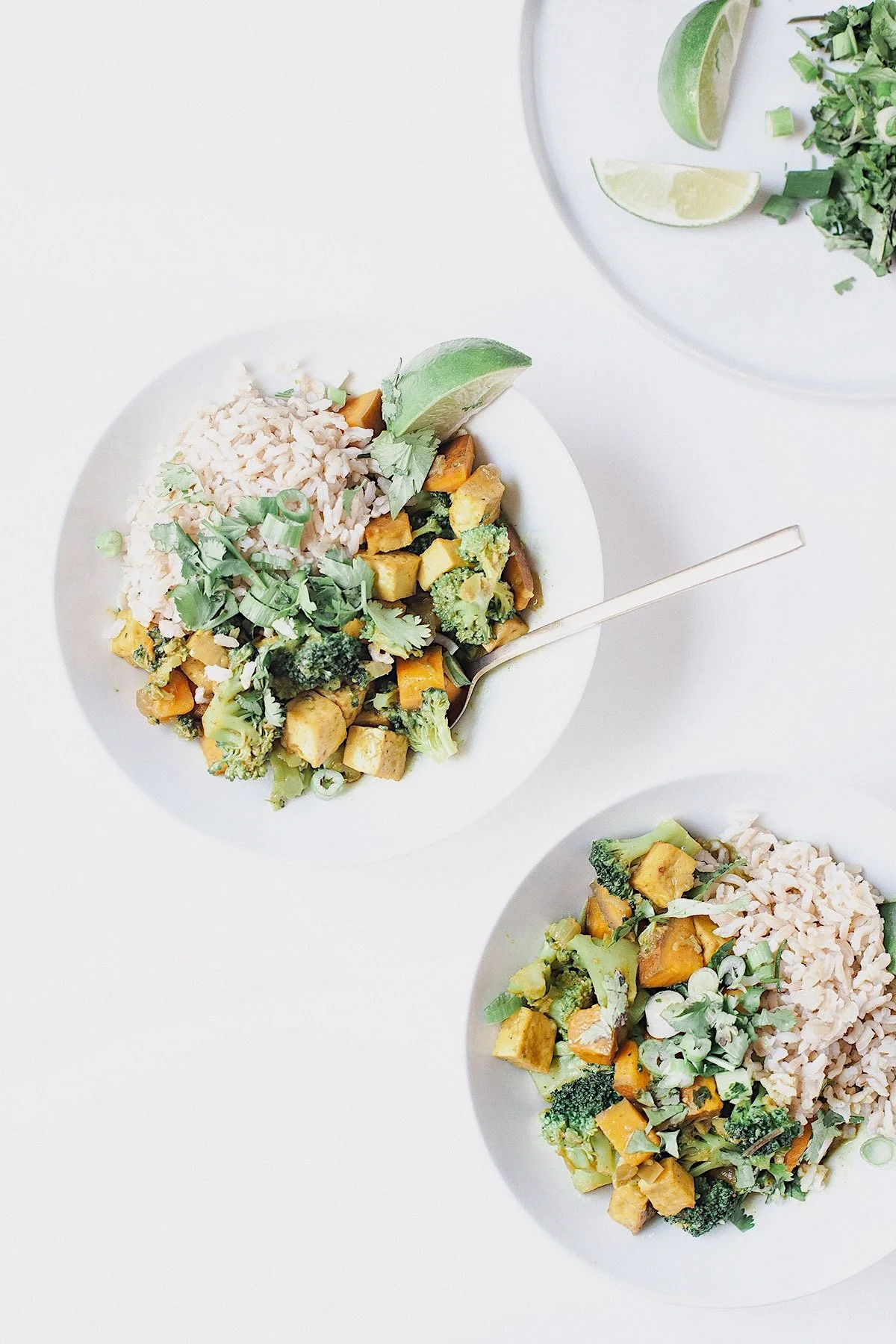
An easy coconut curry built around five pantry staples and whatever vegetables, beans, or cooked protein you have on hand. One pan, about 25 minutes, and deliberately flexible.
There are recipes you shop for, and recipes that work with what is already in the kitchen. This is the second kind.
The base is simple: onion, garlic, ginger, curry powder, and coconut milk. From there, almost anything can become dinner. Sweet potato and broccoli. Cauliflower and chickpeas. Spinach and leftover chicken. Green beans, carrots, tofu, lentils — the combination matters less than the structure.
That flexibility is the reason I have made some version of this curry for years. It is particularly useful at the end of the week, when the refrigerator holds several ingredients but not an obvious meal. The curry brings them together without requiring much planning. Serve it over brown rice or quinoa, finish it with lime and cilantro, and dinner is complete.
Why This Curry Works for Digestion
A digestion-supportive meal does not need a special ingredient list. Often, the more useful approach is building meals around a range of plant foods, adequate fiber, satisfying fat, and enough protein to make the meal substantial.
This recipe makes that easy because the vegetables change every time. Onion and garlic form the base, ginger adds warmth, and several cups of vegetables, beans, or both go into the same pan. Using a mix — rather than relying on the same vegetables every night — naturally creates more variety across the week.
Fiber from vegetables, whole grains, and legumes supports normal bowel function and also provides substrate for microbes in the colon. Harvard Health notes that fiber-rich foods support digestion and the gut microbiome, while also recommending that fiber intake increase gradually if your usual intake is low. (source)
The cooked format can also be useful. If large raw salads do not always sit well, curries, soups, stews, and roasted vegetables offer another way to eat a generous amount of plants. No cleanse. No “detox” ingredients. Just a warm, balanced meal built around foods the digestive system already knows what to do with.
The Easy Curry Formula
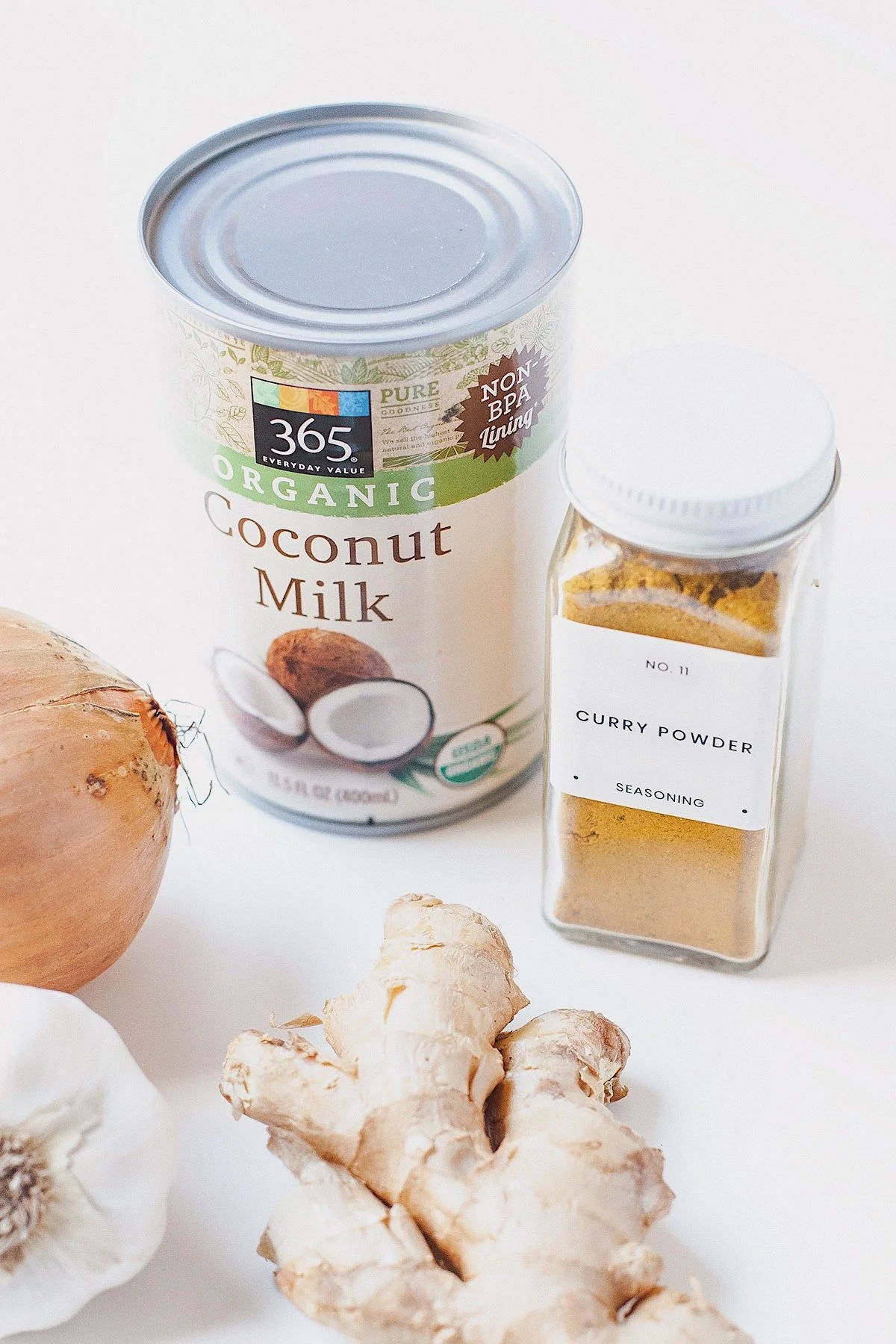
The original version of this recipe was built around five core ingredients, and that is still the part worth keeping simple.
Onion. The savory base. Give it a few minutes in the pan before adding everything else.
Garlic. Four cloves sounds like a lot, but it mellows considerably once cooked.
Fresh ginger. Worth using fresh rather than powdered. It gives the curry brightness as well as warmth.
Curry powder. A good blended curry powder keeps the recipe intentionally simple. There is no need to measure six individual spices on a Tuesday night.
Coconut milk. Full-fat coconut milk gives the curry enough richness to carry a large quantity of vegetables.
Everything after that is negotiable.
Use What You Have
Aim for roughly four to five cups total of vegetables, cooked beans, and/or cooked protein. The important part is adding them in the right order.
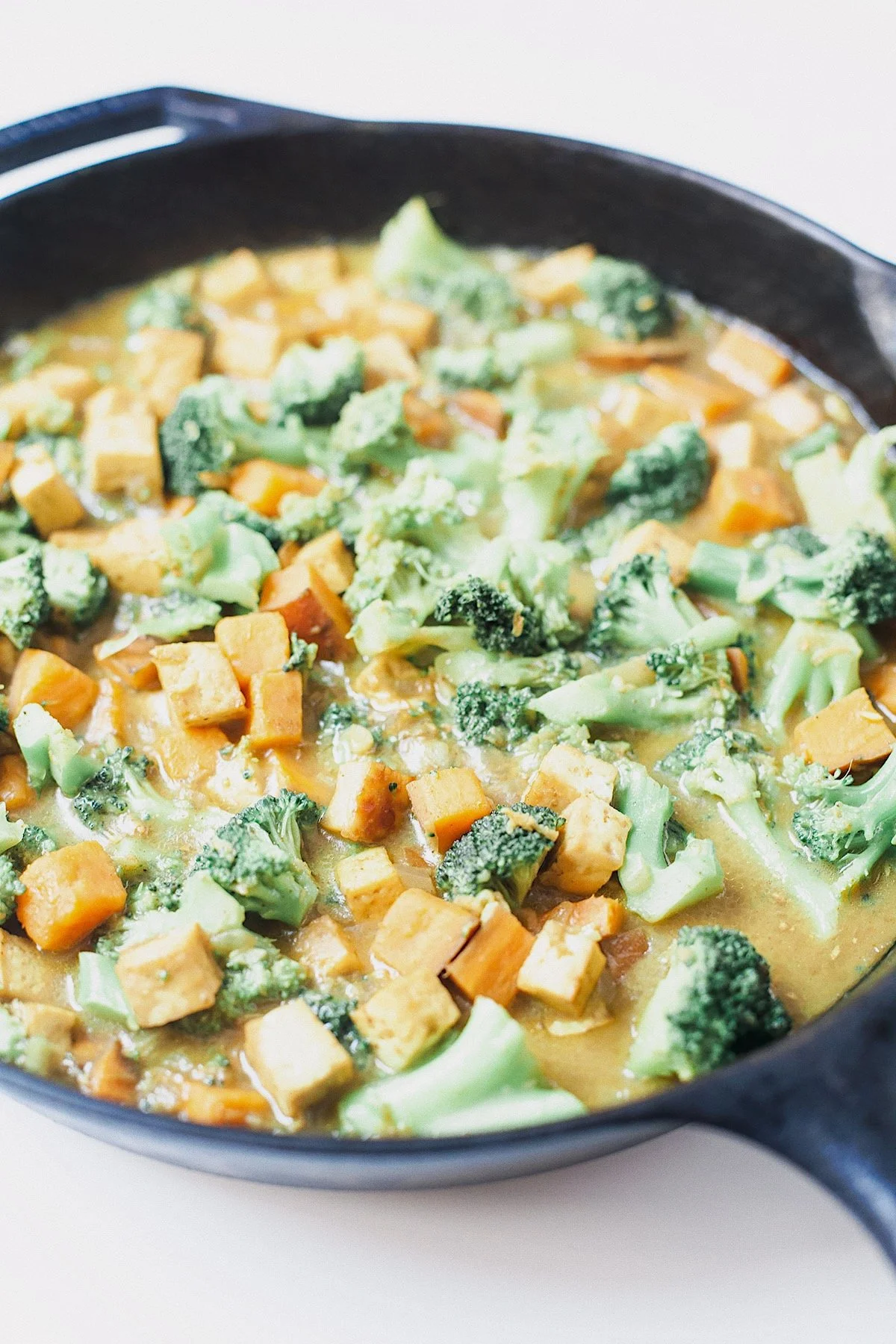
Dense vegetables such as sweet potatoes, winter squash, carrots, or cauliflower need more time, so add them to the coconut curry sauce first and let them simmer until nearly tender. Broccoli, zucchini, green beans, peas, and other quicker-cooking vegetables can go in later. Leafy greens need only a few minutes at the end.
Cooked chickpeas, lentils, tofu, chicken, shrimp, or other leftover protein should generally be added toward the end as well. At that point, they only need to heat through.
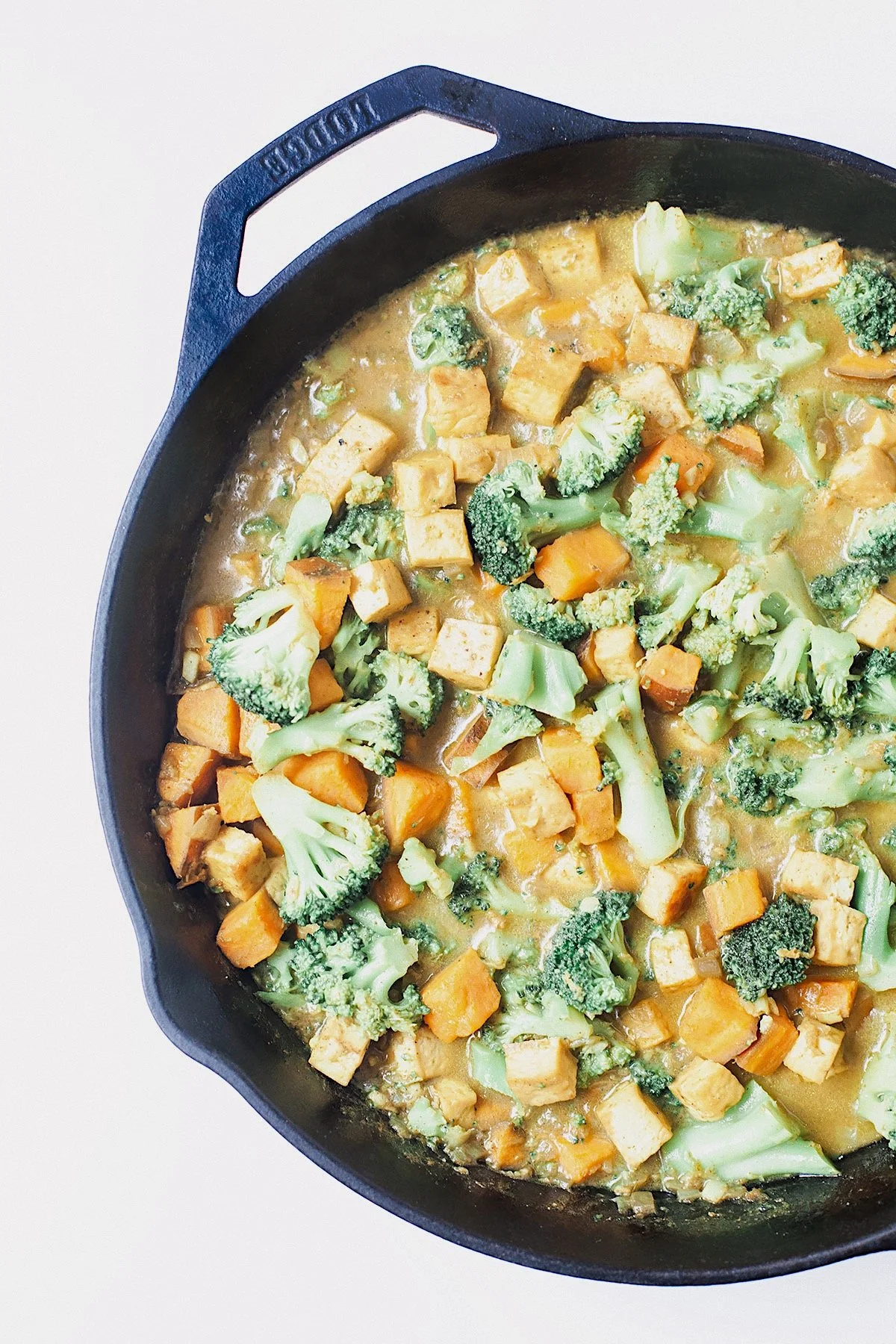
In the version photographed here, I used sweet potato, broccoli, and tofu. It is a particularly good combination, but it is not the recipe. The formula is the recipe.
A Note About Curry Powder
This is not meant to reproduce a traditional curry from one particular cuisine.
“Curry powder” is a blended seasoning, and the exact composition varies by brand. Some blends lean heavily on turmeric and coriander, while others contain more cumin, fenugreek, ginger, chile, or warming spices. That variability is exactly why it works well in a flexible weeknight recipe like this.
A heaping tablespoon gives the coconut milk enough flavor without turning dinner into a spice-cabinet project. If you already keep curry paste in the refrigerator, you can experiment with that instead, but it will produce a different style of curry and the amount needed will vary by brand.
Let the Vegetables Cook at Their Own Pace
The difference between a good anything curry and a pan of overcooked vegetables in coconut milk is mostly timing.
Start with the aromatics. Cook the onion, garlic, and ginger in olive or coconut oil until the onion softens, then stir in the curry powder and let it coat everything in the pan before adding the coconut milk. That brief moment in the hot oil helps the spices become fragrant.
From there, add the vegetables according to how long they need. Sweet potato might need ten or more minutes. Broccoli may need five. Spinach may need two.
The goal is a curry in which the vegetables retain some definition rather than cooking everything until uniformly soft. Add water as needed while it simmers; some batches need only half a cup, while others need closer to a full cup depending on the vegetables and coconut milk.
Season It Properly
This is one of those meals where salt makes a noticeable difference. Coconut milk is rich but fairly muted on its own, and several cups of vegetables dilute the seasoning further. Taste at the end and add salt until the flavors come into focus.
Then add acidity. A squeeze of lime just before eating changes the whole bowl, especially if the curry feels too rich.
Fresh cilantro and sliced scallions work well too. If you like heat, add chile flakes or hot sauce. A few raisins sound unconventional, but the small pockets of sweetness are surprisingly good against the curry spices.
Make It a Complete Meal
Serve the curry over brown rice, quinoa, or another grain if you want something more substantial. You can also skip the grain when the curry already contains sweet potato, squash, chickpeas, or another significant source of carbohydrate.
For more protein, add tofu, chicken, shrimp, lentils, or beans. There is no requirement that every bowl look identical; one person can add rice and tofu while another has more vegetables and chickpeas. That adaptability is part of what makes the recipe useful.
For more on building meals around digestion without turning food into a complicated protocol, read 6 Ways to Improve Digestion Naturally.
The Dinner to Keep in Your Back Pocket
Not every meal needs to begin with inspiration. Some nights, the useful question is simply: what needs to be used?
An onion, half a sweet potato, frozen broccoli, a can of coconut milk, leftover tofu — none of those ingredients look particularly compelling on their own. Together, they become dinner.
That is the point of this curry: a flexible structure, a short ingredient list, and enough room to use what you already have. Simple enough to repeat, different every time.
Easy Anything Curry
An easy one-pan coconut curry made with simple pantry ingredients and whatever vegetables, beans, or cooked protein you have on hand.
Ingredients
- 1 Tbsp extra-virgin olive oil or coconut oil
- 1 yellow onion, chopped
- 4 garlic cloves, minced
- 1 Tbsp freshly grated ginger
- 1 heaping Tbsp curry powder
- 1 (13.5 oz) can full-fat coconut milk
- ½–1 cup water, as needed
- 4–5 cups vegetables, cooked protein, and/or cooked beans
- Sea salt, to taste
For Serving, Optional
- Cooked brown rice or quinoa
- Fresh cilantro
- Sliced scallions
- Fresh lime
- Hot sauce or chile flakes
- Raisins
Method
- Prep the onion, garlic, ginger, and any vegetables you are using.
- Heat the olive oil or coconut oil in a large skillet over medium heat. Add the onion, garlic, ginger, and a generous pinch of salt. Cook, stirring occasionally, until the onion begins to soften.
- Add the curry powder and stir until the aromatics are evenly coated and fragrant.
- Add the coconut milk, ½ cup water, and any longer-cooking vegetables. Reduce the heat slightly and simmer until nearly tender.
- Add quicker-cooking vegetables and continue cooking until just tender. Add cooked protein or beans last and cook only until warmed through. Add additional water as needed to reach your preferred consistency.
- Season generously with salt to taste. Serve with brown rice or quinoa, if desired, and finish with cilantro, scallions, lime, hot sauce, or other toppings.