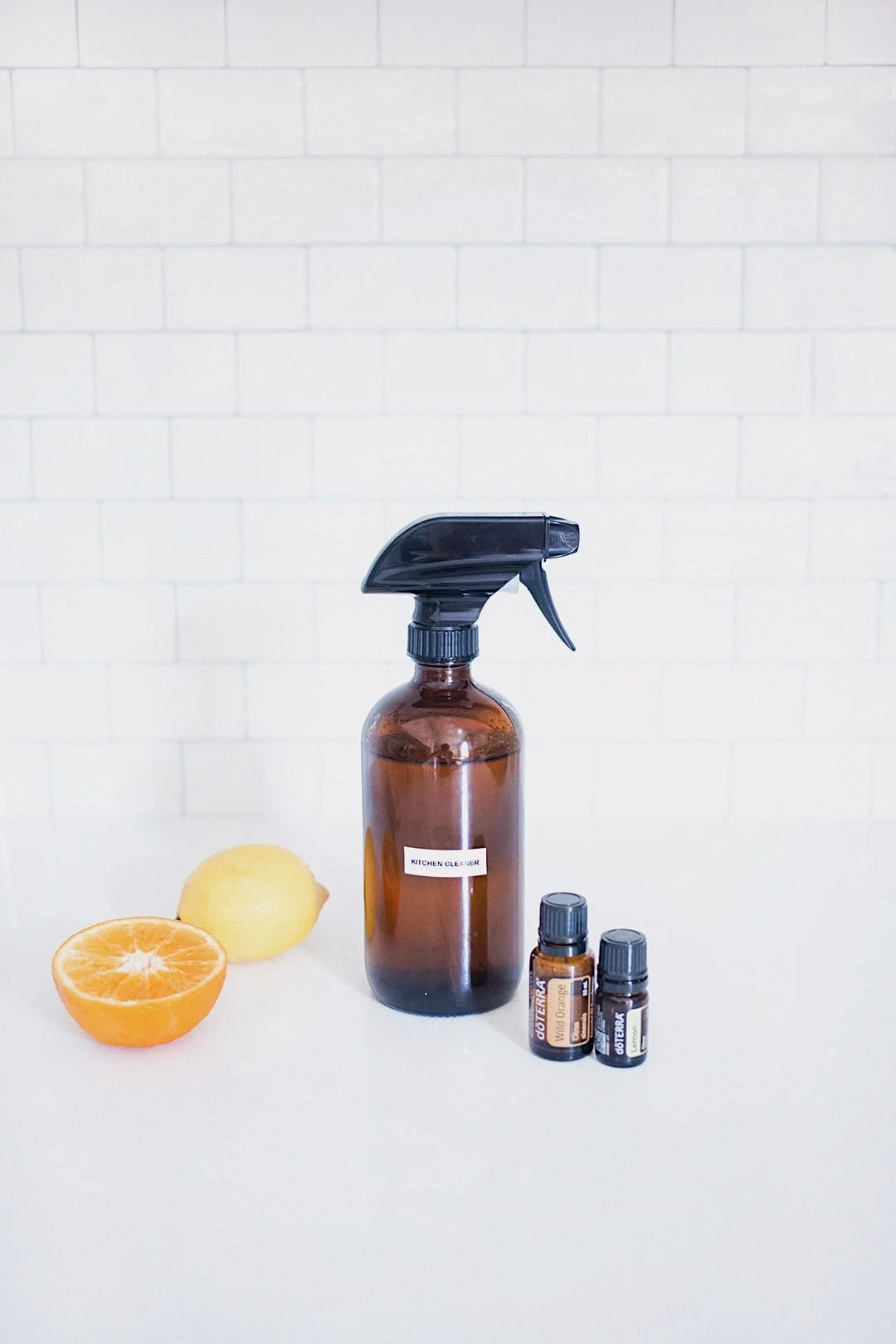
Keeping your kitchen clean shouldn’t come at the cost of unnecessary chemical exposure. Many conventional cleaners contain synthetic fragrances, surfactants, preservatives, and other compounds that can contribute to indoor chemical exposure. Choosing simpler products is one small way to reduce that overall load — especially in the kitchen, where you prep and eat food.
This simple non-toxic kitchen cleaner is made with just a few ingredients—Sal Suds, tea tree oil, and filtered water—for a formula that’s effective, safe for marble, and supportive of a low-tox, digestion-friendly home.
Why Switch to a Non-Toxic Kitchen Cleaner
Your kitchen is where digestion begins—where food, air, and the environment around you all interact. The cleaners you use on your countertops and cooking surfaces matter more than you might think.
Here’s why making the switch makes sense:
1. Reduce Chemical Exposure
Cleaning products can contain synthetic fragrances, preservatives, surfactants, and other chemicals, some of which have known or suspected endocrine-disrupting properties. Some compounds released during cleaning can contribute to indoor air pollution, so choosing simpler products can be one practical way to reduce everyday exposure.
2. Support a Healthier Home Environment
Reducing unnecessary exposure doesn’t require an all-or-nothing approach. Small swaps — especially products you use frequently — can be a practical way to create a lower-tox home environment.
3. Protect Stone Surfaces
Unlike vinegar-based cleaners, this formula is safe for marble, granite, and soapstone, so you can clean confidently without worrying about etching or damage.
4. Simplify and Save
A few drops of Sal Suds go a long way. It’s affordable, biodegradable, and powerful enough for everyday messes—proof that simple really is better.
What You’ll Need
Dr. Bronner’s Sal Suds: A concentrated, plant-based cleaner that cuts grease and grime without harsh chemicals.
Tea Tree Essential Oil: Tea tree oil has natural antimicrobial properties and adds a clean, herbal scent.
Filtered Water: Helps dilute the cleaner and keeps your formula fresh longer.
Optional add-ins: a few drops of lemon or rosemary essential oil for an uplifting scent.
Non-Toxic Kitchen Cleaner (Marble-Safe)
A simple, non-toxic, marble-safe cleaner made with Sal Suds, tea tree oil, and filtered water. Cuts grease without synthetic fragrance or harsh chemicals.
Ingredients
- 2 cups filtered water
- 1 teaspoon Dr. Bronner’s Sal Suds
- 5–10 drops tea tree essential oil
- Optional: 5 drops lemon or rosemary essential oil
Method
- Add water, Sal Suds, and essential oils to a 16 oz glass spray bottle.
- Swirl gently to combine (avoid vigorous shaking).
- Spray on surfaces and wipe clean. Safe for marble, granite, quartz, tile, and stainless steel.
Where to Use It
This all-purpose, marble-safe cleaner can be used on:
Kitchen counters and islands
Sinks and stovetops
Inside cabinets and drawers
Refrigerators and microwaves
Cutting boards and appliances
Avoid using on unfinished wood or unsealed stone.
The Connection Between a Clean Kitchen and a Healthy Gut
Environmental exposures and digestive health are increasingly being studied together, particularly through their potential effects on the gut microbiome and intestinal barrier. The research is still evolving, and a single household product isn’t going to make or break your gut health. But reducing unnecessary chemical exposure where it’s practical can be one part of a broader approach to supporting your overall health.
A homemade kitchen cleaner is a small swap, not a cure-all. If you’re already thoughtful about what you eat and use every day, what you clean your food-prep surfaces with is a reasonable part of that picture.
Not Into DIY?
If DIY isn’t your thing, here are a few clean, non-toxic alternatives that get the job done:
Seventh Generation Disinfecting Multi-Surface Cleaner
ECOS Orange Plus All-Purpose Cleaner
Attitude Kitchen Multi-Purpose Cleaner (Citrus Zest)
All are rated “A” on the Environmental Working Group’s Guide to Healthy Cleaning.
Final Thoughts
Creating a lower-tox home is less about perfection and more about reducing unnecessary exposure where it makes sense. A kitchen cleaner you use every day is a simple place to start.